





Compare The Jeep Wrangler Sport vs Rubicon
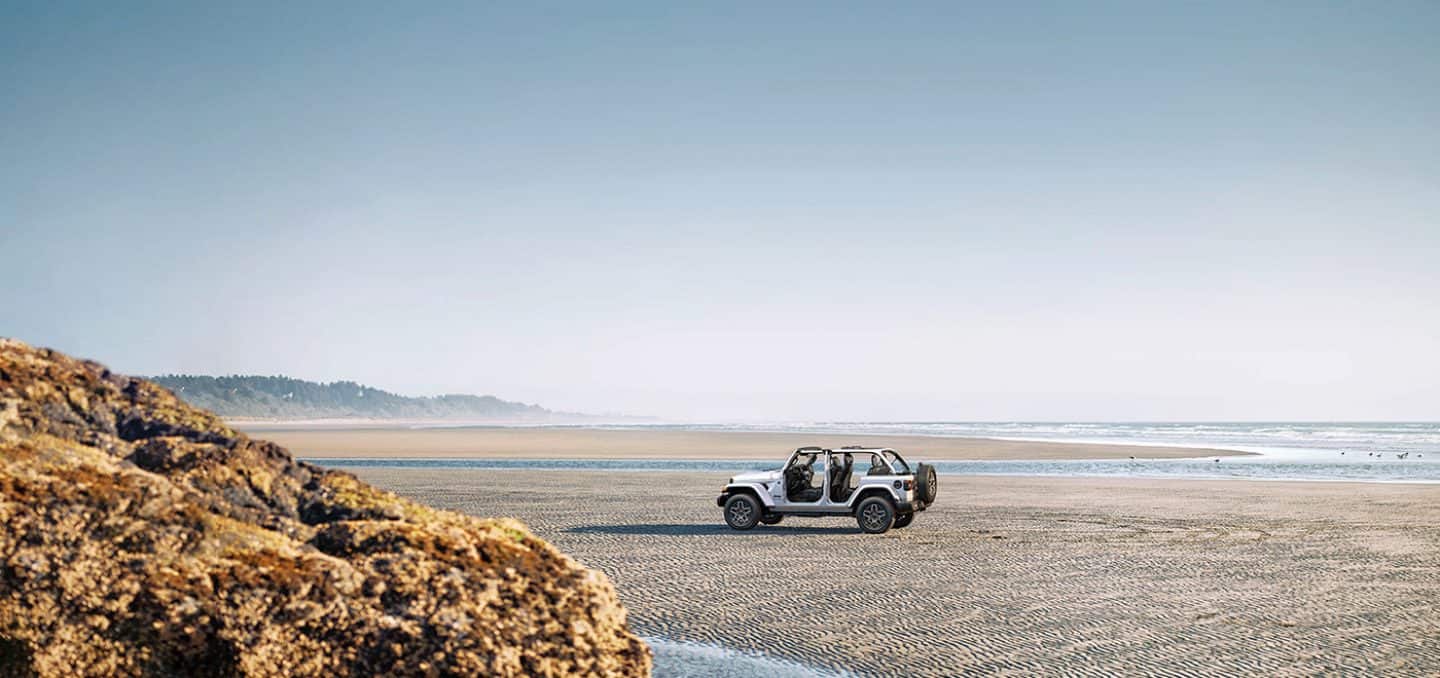
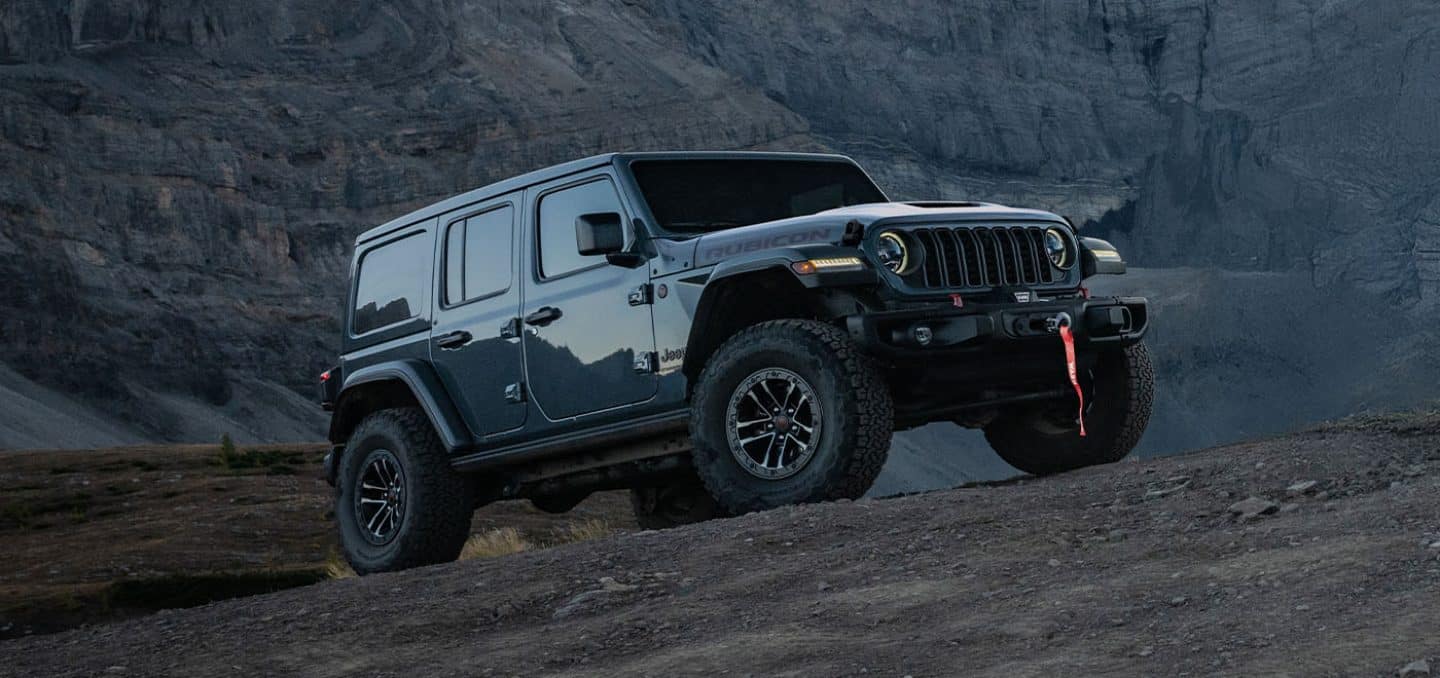
Photo Credit: Jeep
Choosing the perfect 4×4 comes down to a classic matchup: Jeep Wrangler Sport vs Rubicon. While both configurations share the same unmistakable silhouette and open-air freedom, they serve completely different types of drivers.
The entry-level Jeep Wrangler Sport is a blank canvas built for everyday driving and light trails, whereas the legendary Jeep Wrangler Rubicon comes straight from the factory equipped to conquer the world’s most unforgiving terrain.
Pricing: Budget-Friendly vs. Premium Investment
The financial gap between the Jeep Wrangler Sport vs Rubicon pricing structure reflects their intended use. The Sport trim targets buyers looking for a highly capable daily commuter or a project vehicle to modify later with aftermarket parts.
On the other hand, the Rubicon demands a premium investment. The higher price tag accounts for thousands of dollars in heavy-duty mechanical hardware and off-road tech, backed by a factory warranty.
Performance: On-Road Manners vs. Crawling Torque
Under the hood, the standard powertrain for both trims is the reliable 3.6L Pentastar V6. Drivers can also opt for a punchy 2.0L Turbocharged 4-cylinder engine (270 hp / 295 lb-ft of torque).
The real performance divergence occurs in how power is transferred to the ground. The Jeep Wrangler Sport offers an agile, smooth ride on asphalt and predictable highway handling. The Jeep Wrangler Rubicon utilizes a 4:1 low-gear ratio. This means that while both vehicles share similar zero-to-sixty acceleration, the Rubicon delivers massive, controlled torque at crawling speeds to scale steep obstacles safely.
Off-Road Capabilities: Trails vs. Extreme Rocks
The structural upgrades built into the Jeep Wrangler Rubicon elevate it far beyond the Sport’s baseline capability.
- Differentials: The Sport uses open differentials, relying on brake-lock control for traction. The Rubicon features electronic Tru-Lok locking front and rear differentials for a true mechanical lock.
- Sway Bar Disconnect: The Rubicon features an electronic front sway bar disconnect system, allowing wheels to drop and climb independently over extreme articulation barriers.
- Axles: While the Sport relies on standard Dana solid axles, the Rubicon elevates its armor with heavy-duty Dana 44 wide axles and rock rails.
Towing Capacity: Utility Comparison
For years, all Wranglers capped out at a lower rating, but recent architectural shifts have altered the Jeep Wrangler towing capacity landscape.
The two-door Sport and Rubicon variants are both limited to 2,000 lbs due to their shorter wheelbases. However, when moving to the four-door configuration, the Sport tops out at 3,500 lbs. The four-door Rubicon can tow a massive 5,000 lbs when properly equipped with the automatic transmission, thanks to its heavy-duty full-float rear axle design.
Dimension & Cargo Comparison
The physical footprint of the Jeep Wrangler Rubicon vs Sport dimension & cargo comparison reveals subtle structural differences that impact ground clearance and trail dynamics.
Interior & Tech: Utilitarian vs. Premium Comfort
Step inside the cabin, and the contrast becomes immediately apparent. The Jeep Wrangler Sport interior embraces a utilitarian layout with cloth seating, manual locks/windows on base packages, and durable plastics designed to handle mud or water exposure.
The Jeep Wrangler Rubicon interior balances trail ruggedness with advanced tech. It includes standard power features, premium cabin materials, auxiliary switches to add lights or winches, and an advanced digital cluster displaying off-road telemetry data like pitch and roll. Both vehicles feature the intuitive 12.3-inch Uconnect 5 touchscreen system with Apple CarPlay and Android Auto.
Frequently Asked Questions
Can I upgrade a Wrangler Sport to match a Rubicon?
Yes, but doing so aftermarket is often more expensive than buying a Rubicon from the start. Upgrading axles, adding locking differentials, and installing a disconnecting sway bar requires significant mechanical labor and parts costs.
Does the Rubicon ride differently on the highway than the Sport?
Yes. The Rubicon’s performance-tuned suspension and heavy 33-inch all-terrain tires create a firmer, slightly louder highway ride compared to the smoother, quieter all-season street tires on the Sport.
Is the Rubicon worth the extra money if I only do light off-roading?
If your off-roading is limited to dirt roads, snowy highways, and sandy beaches, the Jeep Wrangler Sport with its Command-Trac system is more than capable and will save you thousands of dollars.
More from Southern Chrysler Dodge Jeep Ram Chesapeake
How Electric Power Changes Today’s Muscle Cars
Photo Source/Copyright: DODGE The Next Chapter of American Muscle Dodge is fundamentally changing how we think about performance, but the core formula—raw street presence, aggressive styling, and neck-snapping power—isn’t going anywhere. For local drivers stopping by Southern Chrysler Dodge Jeep Ram Chesapeake, the big question is simple: how does classic muscle handle the jump…
How Much Does a New Jeep Cost?
Photo Credit: Jeep How Much Does the Jeep Wrangler Cost? If you’re trying to budget for a trail-ready 4×4, figuring out how much is a new Jeep isn’t always straightforward. MSRP stickers only tell part of the story, with entry-level two-door models kicking off around $32,000 to $35,000, while high-tier or V8 performance…
Ram Truck Towing Capacity: Guide
When towing is the priority, choosing the right Ram truck means looking beyond the biggest number. The Ram truck towing capacity varies by model, engine, axle ratio, cab configuration, drivetrain, and equipment. Ram Truck Towing Capacity at a Glance Best Ram Truck for Towing: Ram 3500. When properly equipped, the Ram 3500 reaches…